
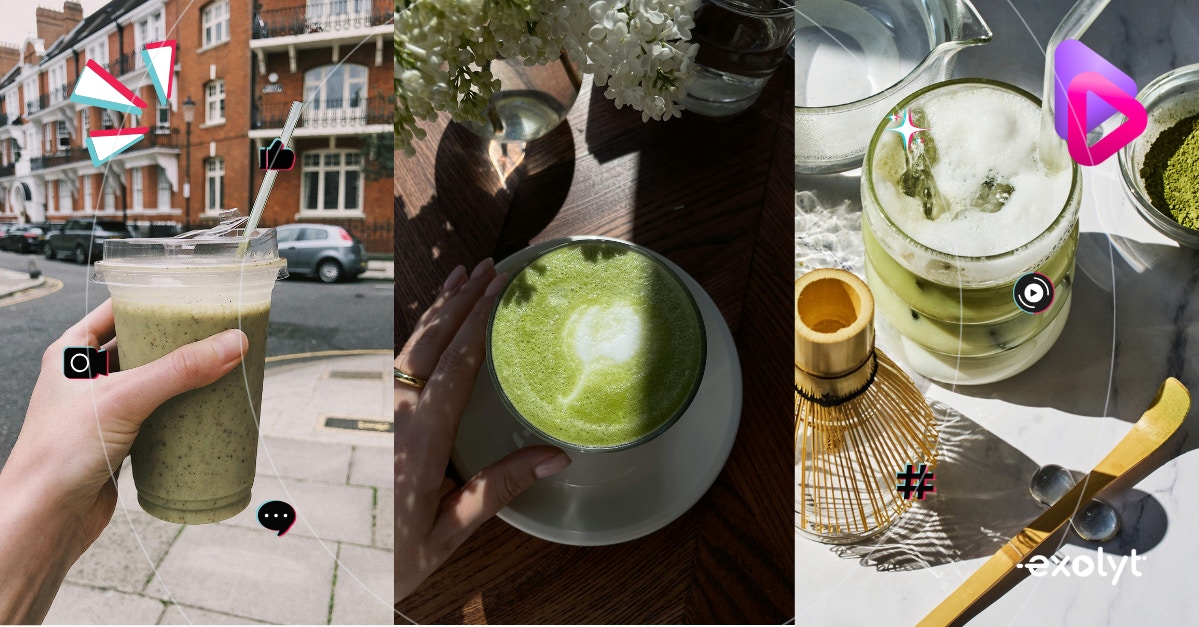
Ihnen ist sicher aufgefallen, dass Matcha derzeit stark im Trend liegt. Was bedeutet das konkret? Wer ist die Zielgruppe? Welche Faktoren treiben den Trend – und warum ist das für Sie relevant?
Lesen Sie weiter für alle relevanten Insights zum globalen Matcha-Trend (und ob er in diesem Herbst Pumpkin Spice übertrifft!).
Gibt es Matcha nicht schon seit Langem?
Ja! Matcha ist seit einigen Jahren auch außerhalb Japans sowohl bei Teetrinkern als auch in der Wellness-Community beliebt. Ein Blick auf das Google-Suchvolumen zu Matcha seit 2023 zeigt, dass die Suchanfragen in den letzten drei Jahren kaum zugenommen haben.
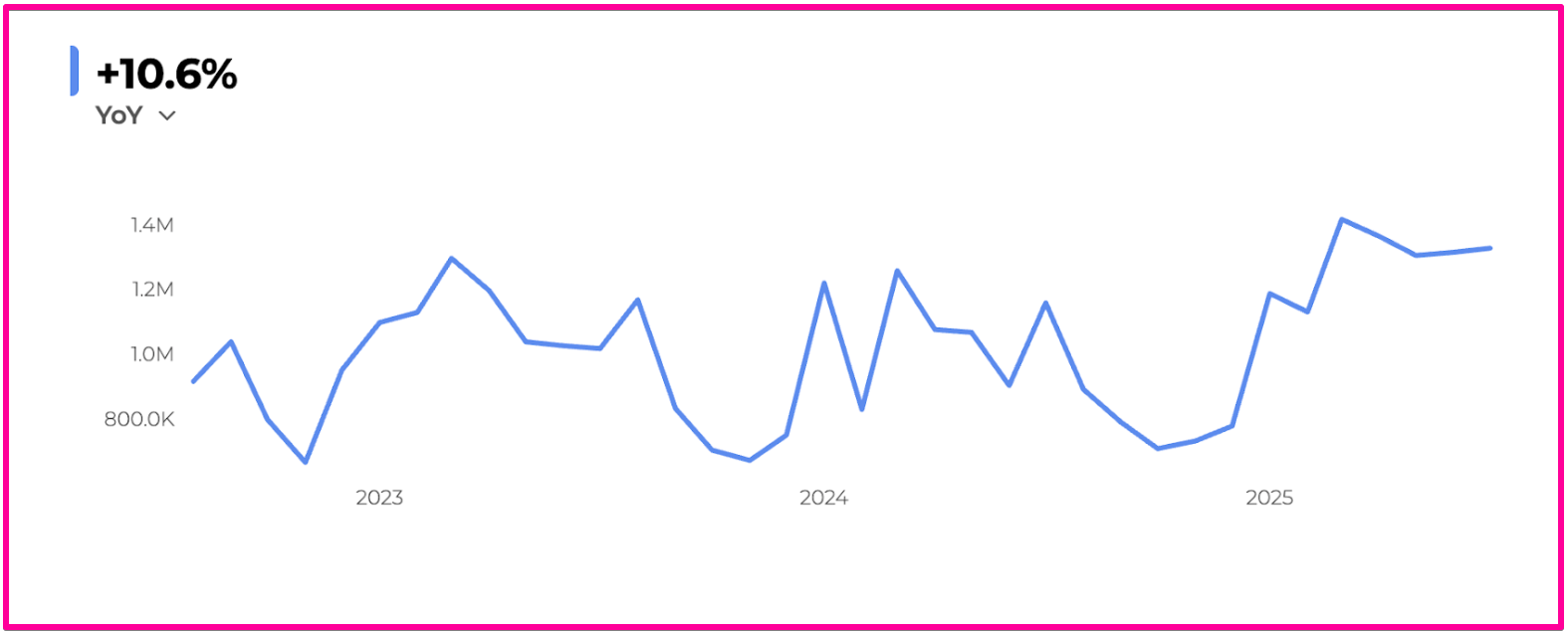
Die Google-Suche wird typischerweise vor allem von der Zielgruppe 30+ genutzt; jüngere Nutzer suchen nach Produkten hingegen häufiger über Social Media oder Amazon.
Personen, die bei Google nach Matcha suchen, besuchen Websites wie 'Love and Lemons' und Ippodo Tea – ein Hinweis darauf, dass es sich um Teeliebhaber und/oder Wellness-Interessierte handelt.
Was hat sich geändert?
Vorweg: Es ist TikTok.
TikTok verzeichnet derzeit 2,9 Mio. Videos mit dem Hashtag #matcha, die zusammen beeindruckende 36,1 Mrd. Aufrufe erzielt haben.
Die Grafik unten zeigt die Aufrufe von Inhalten zu Matcha und verwandten Begriffen auf TikTok in den letzten drei Jahren. Die Erwähnungen waren 2023 bis Mitte 2024 weitgehend stabil, danach setzte ein deutlich stärkerer Aufwärtstrend ein. Im Frühjahr 2025 zog die Dynamik auf der Plattform deutlich an: Die Aufrufe stiegen im Jahresvergleich um 376 %.
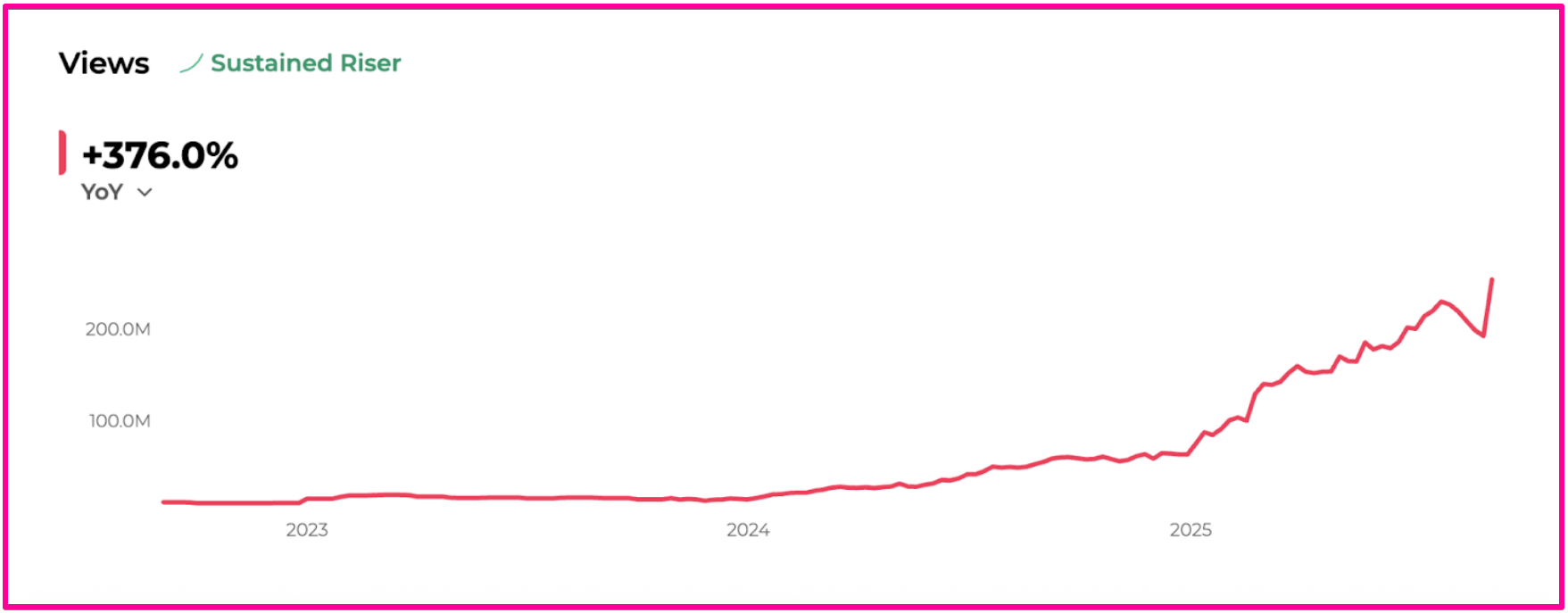
Auf Instagram fällt das Bild zwar weniger deutlich aus, dennoch verzeichnen wir dort einen Zuwachs von 120 % im Jahresvergleich.
Und das findet nicht nur in den USA statt; Matcha ist überall.
Matcha macht gerade das, was Pumpkin Spice vorgemacht hat – mit dem Unterschied, dass Pumpkin Spice über ein Jahrzehnt bis zur globalen Popularität brauchte, während Matcha das in weniger als drei Jahren erreicht hat.
Mit Exolyt habe ich die Überschneidungen zwischen matcha und anderen Hashtags auf TikTok im Juli und August dieses Jahres analysiert.
Dieser Ansatz ermöglicht uns, die Schlüsselthemen rund um Matcha schnell zu erfassen und zu sehen, wie sich die Gespräche natürlich clustern.
Ich habe die Daten der US-Zielgruppe mit denen einer europäischen Zielgruppe im selben Zeitraum verglichen, um zu verstehen, wie sich der Trend auf den unterschiedlichen Kontinenten ausprägt.
- Beide Märkte zeigen starkes Interesse an Matcha als Teil einer „Aesthetic“ – ein Hinweis darauf, dass Matcha mehr ist als nur ein Getränk und sich zu einem Lifestyle-Indikator entwickelt hat.
- Eine weitere Gemeinsamkeit ist die starke Präsenz von Kaffee in den Gesprächen, was darauf hindeutet, dass Matcha Kaffee als bevorzugtes Getränk dieser Zielgruppe abgelöst hat.
In den USA sehen wir, dass der Hashtag zusammen mit Skincare und etablierten TikTok-Trends wie #asmr genutzt wird. Die Gespräche in den USA bündeln sich in größeren kulturellen Clustern – ein Hinweis auf eine einheitlichere, stärker zusammenhängende Zielgruppe.
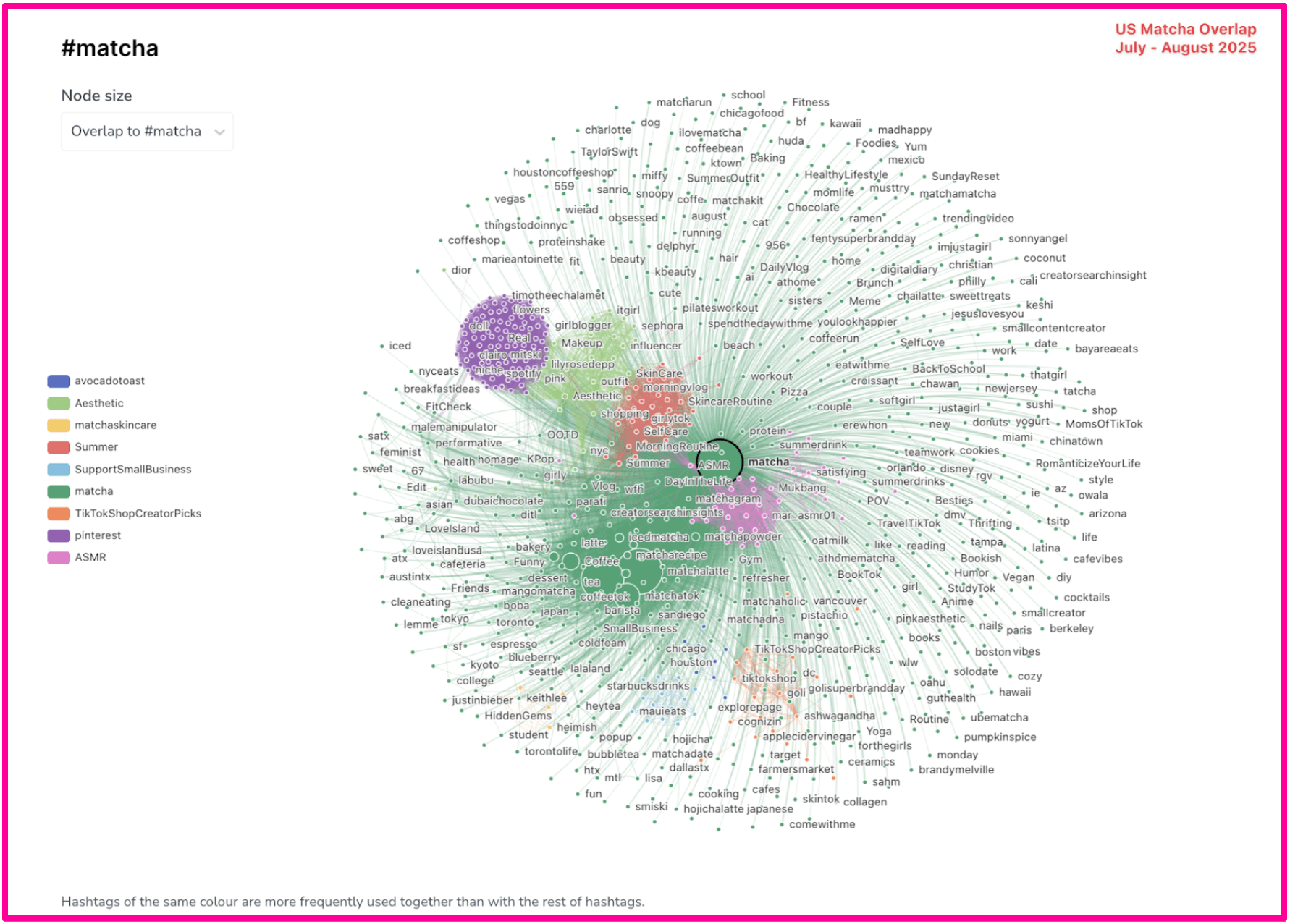
Exolyt - Zugehörige Gespräche über Matcha in den USA
In Europa ist der Diskurs fragmentierter und überschneidet sich mit unterschiedlichen Lifestyle-Trends – darunter #matchagirly, wo Matcha zu einem prägenden Teil der Persönlichkeit wird.
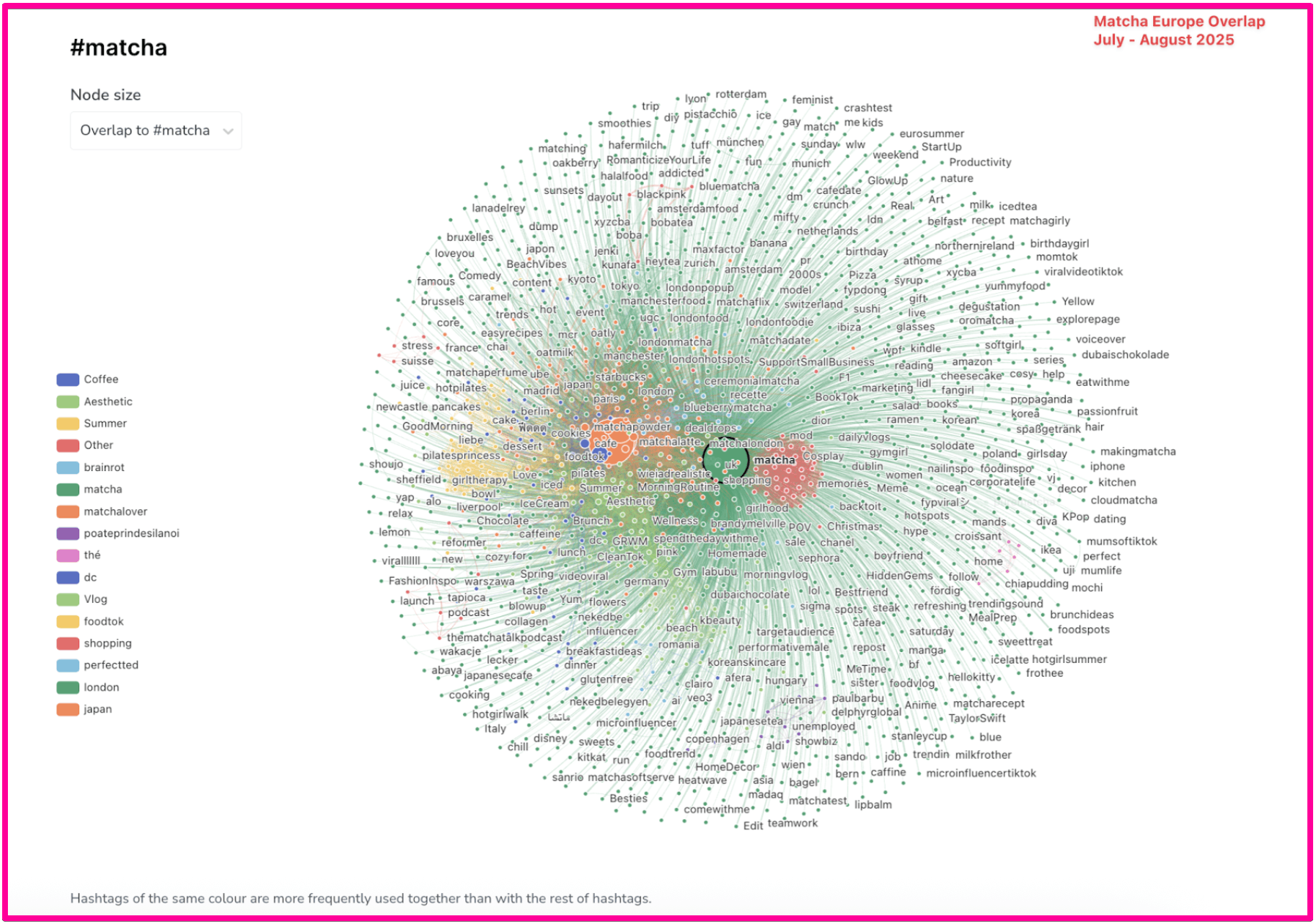
Das ist nicht der einzige Trend, in dem Matcha eine Rolle spielt. In den letzten Wochen ist Matcha ins Zentrum des TikTok-Trends performative Männlichkeit gerückt.
Auf TikTok sind Beeren-Geschmacksrichtungen mit Abstand am beliebtesten; Apfel/Birne und tropische Geschmacksrichtungen belegen die nächsten beiden Plätze.
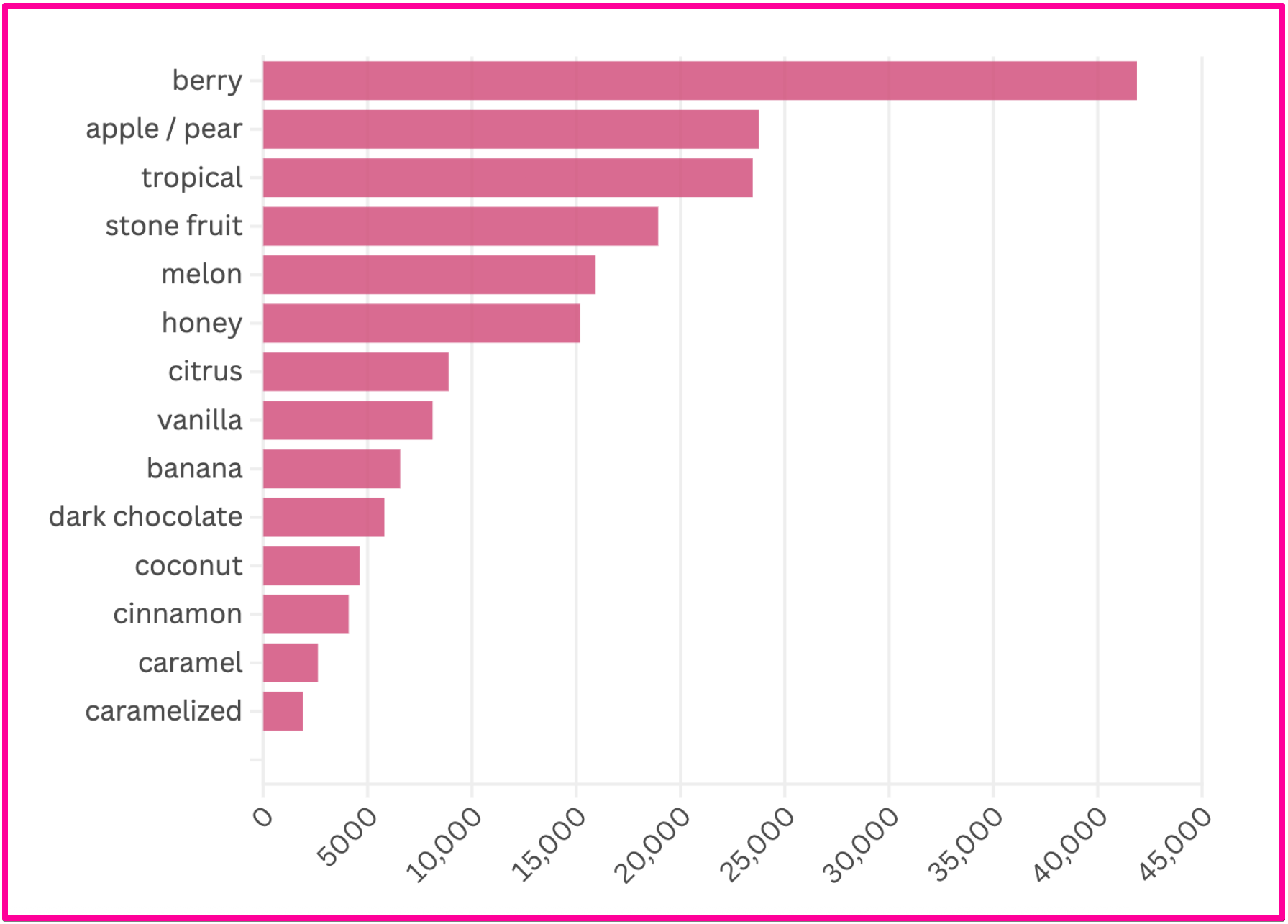
Erdbeer-Matcha ist die am schnellsten wachsende Geschmacksrichtung in diesem Jahr, mit einem Wachstum der Views um 85 % gegenüber dem Vorjahr. Dazu trägt nicht zuletzt Starbucks bei – die beliebteste Marke in den Gesprächen rund um Matcha. Das Unternehmen bietet aktuell über 20 Matcha-Drinks an (darunter einige Klassiker außerhalb der offiziellen Karte).
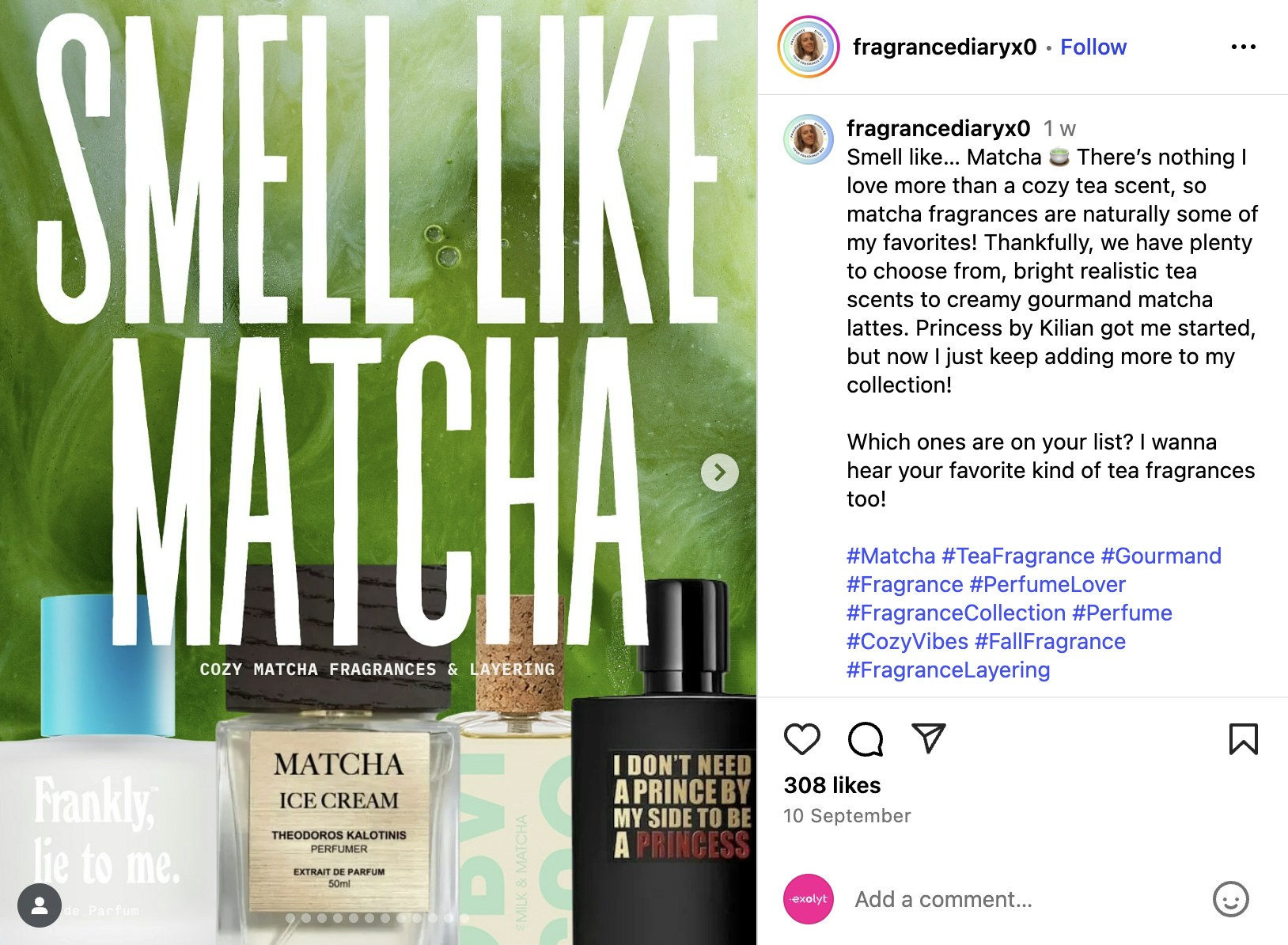
But Matcha ist längst mehr als nur ein Getränk: Matcha-Düfte setzen sich als Teil des von #fragrancetok getriebenen Gourmand-Dufttrends durch. D'annam ist der Kategorieführer, doch in diesem Jahr tauchen Matcha-Düfte nahezu überall auf.
Parallel dazu halten Matcha-Töne in der Kosmetikbranche Einzug; die Matcha Bubble Lip Mask von Laniege wird zum Must-have dieser Saison.
Hier ein kurzer Einblick, wie wir mithilfe der Exolyt's AI Visual Analysis-Technologie entdeckt haben, dass Matcha die #BeautyTok-Community auf TikTok zunehmend prägt.
Dies ist ein Ausschnitt aus einer Präsentation, gehalten von Kim Townend und Tigran Khachatryan (Data Scientist bei Exolyt), auf der YMS London im Juni 2025 zum Thema TikTok-Daten in kulturelle Insights verwandeln – mit Video Social Listening.
Erfahren Sie mehr in der vollständigen Präsentation (unten verlinkt), inklusive exklusiver Insights aus den BookTok-, GameTok- und BeautyTok-Communities.
Wer steht hinter dem Matcha-Trend?
Wie bei nahezu allen kulturell relevanten Entwicklungen treiben Frauen der Generation Z den Trend voran.
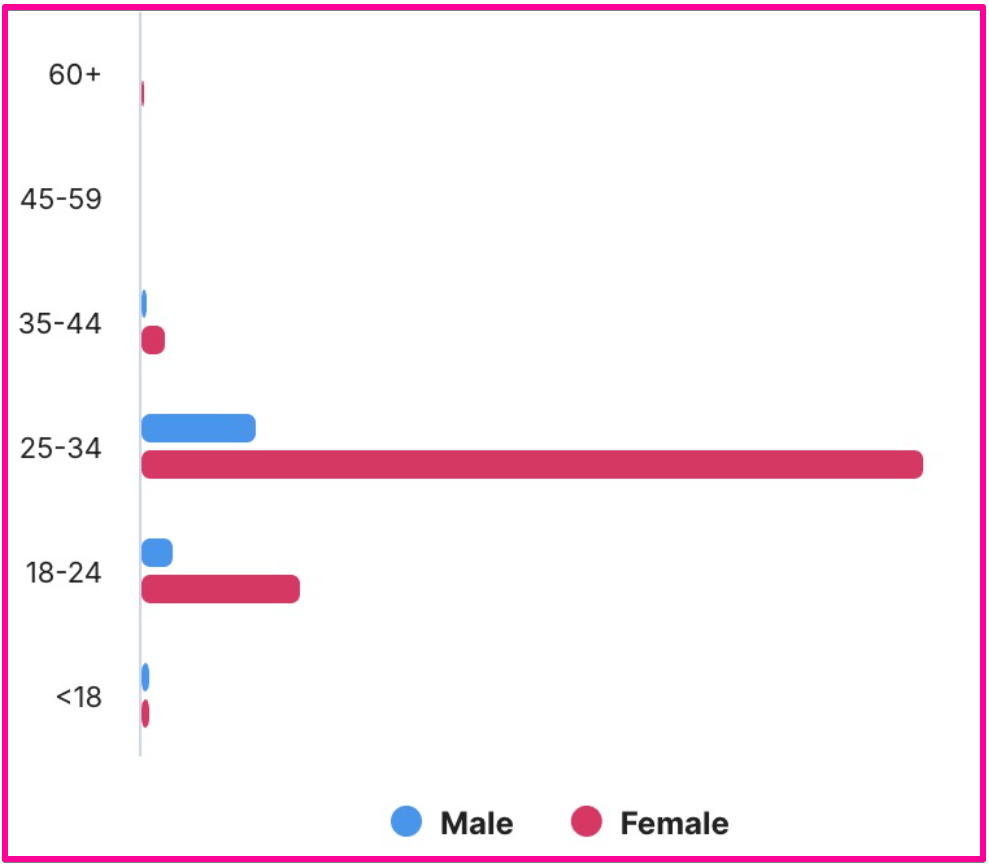
Sie sind häufig Mütter und interessieren sich für Mode, Beauty, Reisen und Food. Bei genauerem Blick auf ihre Interessen kommen Bücher, Fitness, Fotografie, Gesundheit, Unternehmertum und mehr hinzu. Es gibt also nicht die typische Matcha-Konsumentin – Matcha ist für jede Frau.
Auf welchen weiteren Social-Media-Plattformen taucht Matcha auf?
Auch wenn es den Eindruck erweckt, dass Matcha überall präsent ist, spielt sich die Aktivität überwiegend auf zwei Plattformen ab. Unsere Analyse zeigt: Im Sommer entfielen 77 % der Matcha-Erwähnungen auf TikTok, 11 % auf Instagram und nur 9 % auf Twitter.
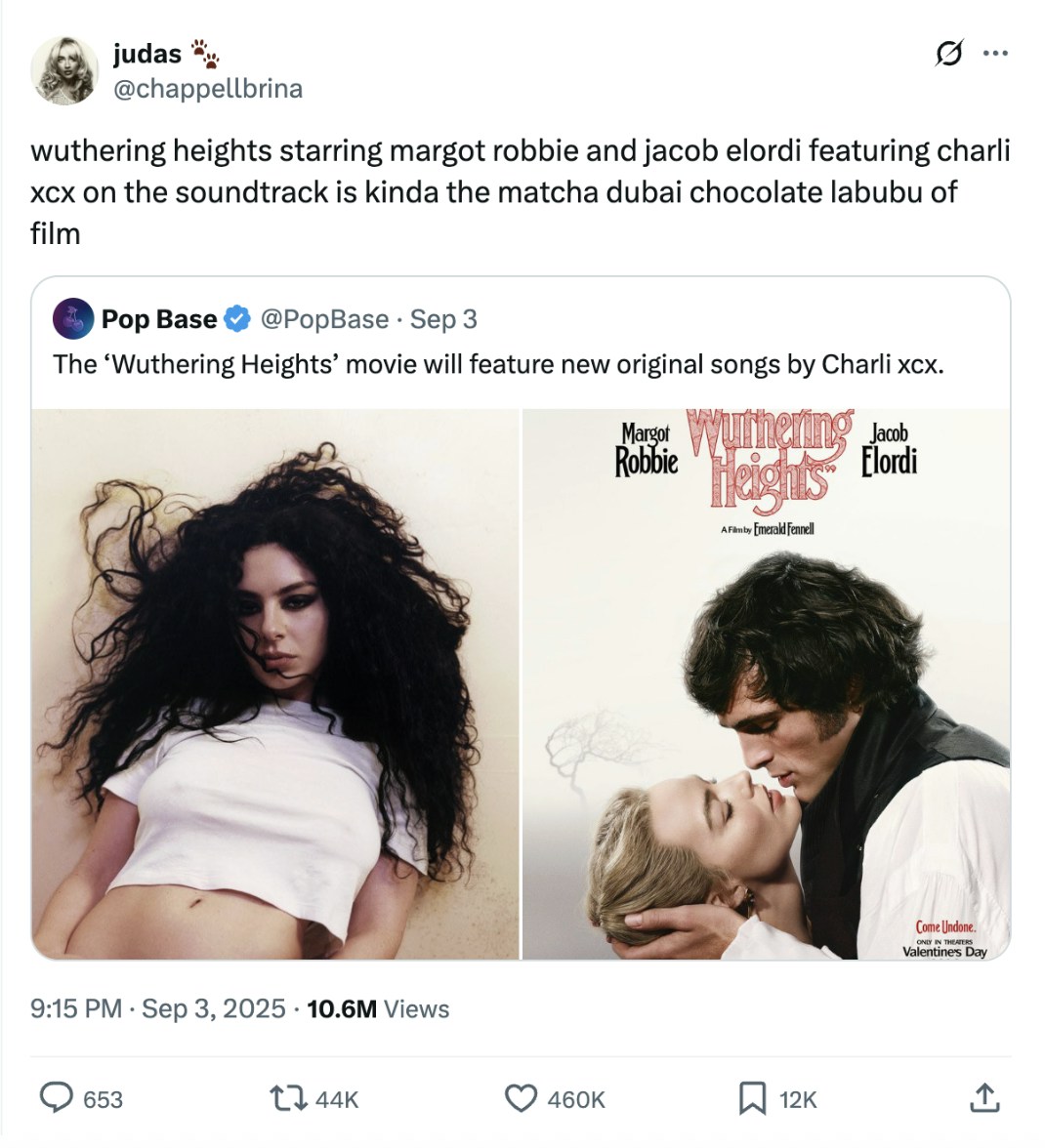
Die Diskussion auf Twitter wurde zum Teil nicht durch Posts über Matcha, sondern durch Erwähnungen von Matcha als kulturellem Code für einen bestimmten Moment geprägt.
Der untenstehende virale Tweet, verfasst als Reaktion auf den Wuthering-Heights-Trailer, nennt Matcha neben Dubai chocolate und Labubu. Matcha ist inzwischen so eng mit einem bestimmten Typ von Internetnutzer verknüpft, dass der Begriff mittlerweile als Chiffre für diese Nutzergruppe dient.
Aber das war der Sommer – jetzt ist Herbst. Dominiert Matcha weiterhin?
Zum Abschluss unserer Analyse untersuchen wir, wie sich Matcha im Vergleich zu Pumpkin Spice schlägt – mit dem saisonalen Wechsel von Eis- zu Heißgetränken in den Wintermonaten.
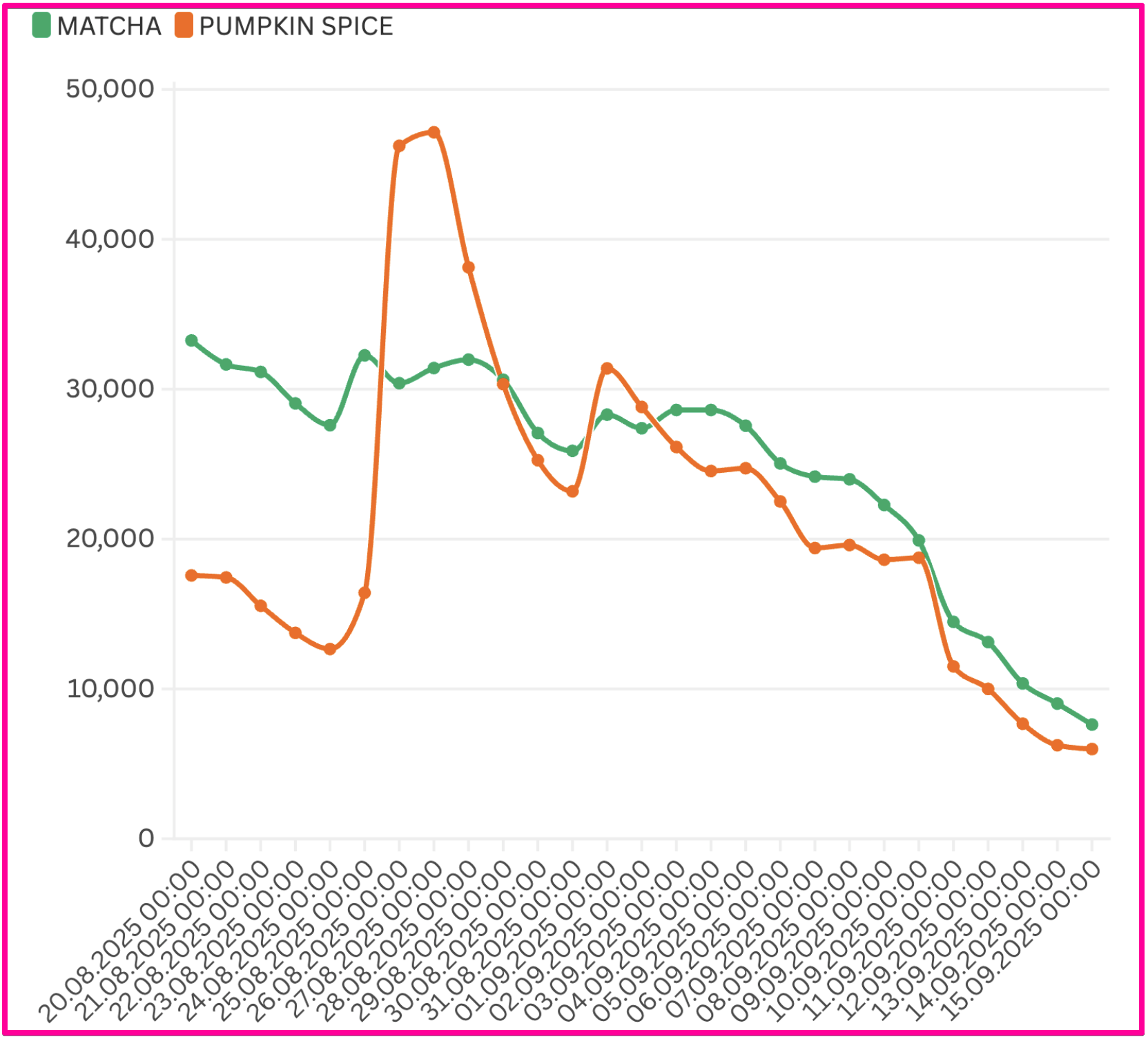
Wir haben den Zeitraum von der Woche vor dem diesjährigen Launch des Pumpkin Spice Latte von Starbucks bis zum 15. September analysiert – in den USA und im UK, plattformübergreifend auf TikTok, Instagram, Twitter und Threads.
Unsere Daten zeigen: Trotz eines Peaks am #PSL-Day hat Pumpkin Spice beim Share of Voice (SOV) gegenüber Matcha verloren. Noch interessanter: Beide Getränke sind zum Herbstbeginn rückläufig – und lassen damit viel Raum für den nächsten Getränketrend.
Unsere Daten zeigen, dass Matcha voraussichtlich bis ins Jahr 2026 hinein weiter wächst. Unsere Social-Listening-Analyse deutet jedoch auf eine ausgeprägte Saisonalität hin (im August bezog sich fast ein Drittel aller Matcha-Erwähnungen auf Iced Matcha).
Innerhalb kürzester Zeit dominiert Matcha die TikTok-Landschaft; andere Plattformen ziehen nach. Matcha ist fester Teil der TikTok-Kultur, fungiert als Erkennungszeichen und prägt in diesem Jahr zahlreiche Trends.
All das zeigt: Marken müssen die Welt ihrer Zielgruppen und die Sprache sowie kulturelle Codes verstehen, mit denen sie kommunizieren. Social Listening ist der effektivste Weg, genau das zu erreichen – und hilft Ihnen, in Echtzeit relevante Chancen zu identifizieren.
Fazit:
Innerhalb kürzester Zeit dominiert Matcha die TikTok-Landschaft – andere Plattformen ziehen nach. Es ist Teil der TikTok-Kultur geworden und dient als kulturelles Kürzel; in diesem Jahr ist es zum Kernbestandteil zahlreicher Trends geworden.
All das unterstreicht, wie wichtig es für Marken ist, die Lebenswelt ihrer Nutzer sowie die Sprache und Codes zu verstehen, mit denen sie kommunizieren. Social Listening ist dafür der effektivste Ansatz und hilft Ihnen, in Echtzeit relevante Chancen zu erkennen.
Dies ist ein Gastbeitrag, zusammengestellt von Kim Townend, einer preisgekrönten Social-Strategin und Beraterin für Social Listening mit 20 Jahren Erfahrung im Bereich Social Media. Sie hat weltweit mit Marken, Medienunternehmen und Regierungen gearbeitet und ist Expertin darin, Daten in Insights zu übersetzen und Insights in Strategie zu überführen. Mehr über sie finden Sie auf ihrer Website: https://kimtownend.com/ oder auf ihrer LinkedIn-Seite: https://www.linkedin.com/in/kimtownend/