

Während sich die digitale Welt kontinuierlich weiterentwickelt, reichen klassische Ansätze der Videoanalyse nicht mehr aus. Unternehmen benötigen heute mehr denn je leistungsstarke Tools, die große Mengen an Videoinhalten effizient durchsuchen und auswerten können.
In diesem Blogbeitrag beleuchten wir die transformative Bedeutung der Videosuche und die unverzichtbare Rolle von Bild- und Textanalyse, um die Komplexität moderner Mediennutzung zu verstehen.
Erfahren Sie, warum die AI Video Search von Exolyt im heutigen dynamischen digitalen Umfeld nicht nur ein zusätzliches Feature, sondern unverzichtbar ist.
Warum ist dieser Ansatz für die Suche in Social Videos notwendig?
Angesichts des exponentiellen Wachstums von Videoinhalten auf Social-Media-Plattformen benötigen Unternehmen leistungsstarke Tools, um relevante Insights effizient zu erfassen, zu analysieren, sichtbar zu machen und unternehmensweit zugänglich zu machen.
Allerdings verlieren wir uns häufig in quantitativen Kennzahlen und konzentrieren uns ausschließlich auf Metadaten wie Hashtags, Engagement-Raten und Zielgruppengröße – während der eigentliche Content aus dem Blick gerät!
Nur wenn wir den Inhalt eines Social-Videos verstehen, können wir Trends und Nuancen wirklich erkennen: was Menschen tun und sagen und wie sich Nutzerverhalten zeigt. Der Content kann tiefere qualitative Social-Listening-Insights sichtbar machen, die sich zu fundierten Erkenntnissen verdichten lassen.
Gängigster Ansatz für die Social-Video-Suche:
Viele Videoplattformen, darunter auch Exolyt, nutzen heute eine tagbasierte Suche, um Videos zu finden. In tagbasierten Suchsystemen kategorisieren Nutzer Videos mithilfe spezifischer Tags oder Keywords, damit Plattformen besser verstehen, was im Video passiert.
- Wenn Nutzer nach Keywords suchen, die exakt mit diesen Tags übereinstimmen, werden relevante Inhalte angezeigt. Sucht jemand beispielsweise nach „quick tutorial for moonwalk dance“, würden tagbasierte Suchsysteme Videos mit Tags wie „quick“, „tutorial“, „moonwalk“ und „dance“ anzeigen.
So einfach diese Methode ist, liefert sie häufig keine umfassenden Ergebnisse – insbesondere dann, wenn Nutzer detaillierte Long-Tail-Keywords und phrasenartige Suchanfragen verwenden, die nicht zwingend Wort für Wort mit vordefinierten Tags übereinstimmen.
- Anhand des obigen Beispiels würde ein Video mit dem Titel “Learn Michael Jackson's Iconic Moves in 5 Minutes” nicht in den Suchergebnissen erscheinen, da es keinerlei Überschneidung mit der Suchanfrage des Nutzers aufweist.
- Zudem suchen Nutzer häufig nach Suchbegriffen, die nicht unbedingt zum Hauptthema des Videos gehören. Sucht jemand beispielsweise nach „Künstler mit schwarzem Hut“, wird ein Video über Michael Jackson womöglich nie angezeigt, weil der Wortlaut „Künstler mit schwarzem Hut“ in seinen Metadaten wahrscheinlich nicht vorkommt.
Typische Nutzerattribute:
- Viele Content Creator markieren oder erwähnen Ihre Marke oder Produkte möglicherweise nicht, nutzen sie aber weiterhin und teilen wertvolles Feedback, indem sie sie einfach in ihren Inhalten zeigen.
- Viele TikTok-Creator verwenden Hashtags und Captions immer seltener. Dennoch zeigen ihre Videos weiterhin etwas Entscheidendes, das leicht übersehen wird.
Diese und viele weitere Herausforderungen erfordern bessere Suchfunktionen. Deshalb möchten wir Ihnen mit einem semantischen Video-Suchtool genau diesen Zugang in großem Maßstab ermöglichen.
Was ist die KI-gestützte Videosuche von Exolyt?
Die neue AI Video Search von Exolyt zielt darauf ab, genau das oben beschriebene Problem zu lösen und macht Content leicht auffindbar.
Anstelle einer schlagwortbasierten Suche setzen wir auf maschinelles Lernen und Künstliche Intelligenz: Wir analysieren die Einzelbilder im Video, extrahieren deren Inhalte und machen sie für die textbasierte Suche durchsuchbar.
Die Videosuche von Exolyt geht über die reine Hashtag- und Caption-Suche hinaus und setzt auf semantische Analyse, um sämtliche bisher übersehenen Videos zu erfassen.
Die Ergebnisse sind umfassend und erfassen auch Videos, in denen Ihre Produkte im Bild zu sehen sind, obwohl sie nicht getaggt wurden. Zudem finden Sie Erwähnungen im On-Screen-Text, die mit Ihrer Suche zusammenhängen, sowie weitere relevante Inhalte, damit Sie Videocontent gezielt nach Ihren Anforderungen bündeln können.
Wie funktioniert das?
Exolyt nutzt modernstes Machine Learning, um Videos in hochdimensionale Vektoren umzuwandeln. Diese Vektoren erfassen die prägnantesten Merkmale der Videos. Auf Basis dieser Merkmale erstellen wir ein Koordinatensystem, in dem jedes Video seinen eigenen, eindeutigen Platz erhält.
So machen wir Content sichtbar, der im Nebel von E-Commerce und Entertainment untergeht – indem wir die für Ihre Anforderungen relevantesten Videos erfassen.
Hier ist ein einfaches Beispiel mit einfachen Formen und Farben –
Angenommen, wir hätten diese Baumformen und müssten ihre Unterschiede und Gemeinsamkeiten effektiv beschreiben.

Wir sehen, dass Formen zwei klar unterscheidbare Eigenschaften haben: Rundheit und Farbe. Wir könnten ein „Koordinatensystem“ erstellen, in dem „Rundheit“ und „Farbe“ die Dimensionen sind, und diese Formen wie folgt in diesem Koordinatensystem platzieren:
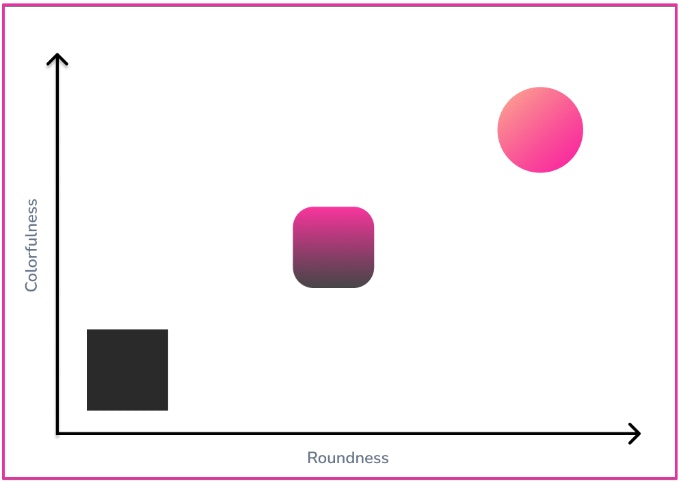
Je weiter rechts, desto runder werden die Formen; je weiter oben, desto farbenfroher werden sie.
Unsere Content-Suche basiert auf denselben Grundprinzipien – allerdings analysieren wir statt Formen Videos und verwenden statt „Rundheit“ und „Farbigkeit“ stärker inhaltsspezifische Merkmale.
Hier ist ein stark vereinfachtes Beispiel dafür, wie sich die Methode im Kontext der Videos veranschaulichen lässt –
Man kann sich vorstellen, dass eine Dimension misst, wie stark ein Video dem Bereich „Kosmetik“ zuzuordnen ist, während die andere erfasst, wie stark es dem Bereich „Fashion“ entspricht. Anhand dieser Dimensionen lassen sich die Videos abbilden und ihre Abstände zueinander messen.
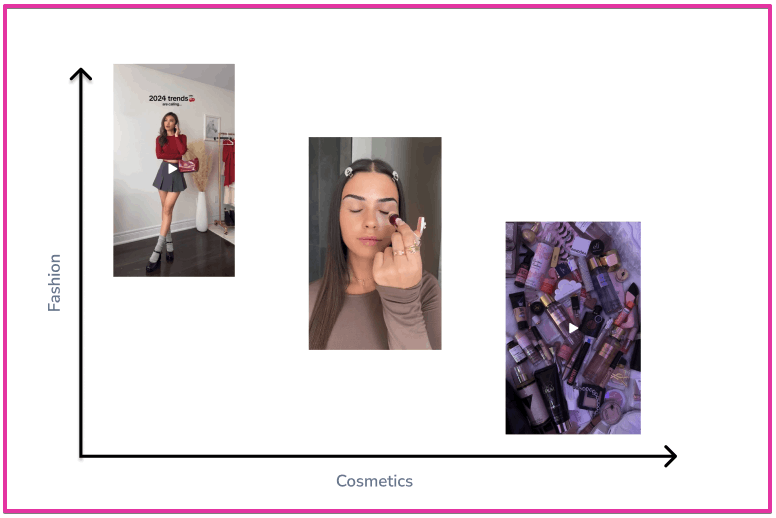
Bitte beachten Sie, dass dieses Beispiel nur zwei sehr einfache Dimensionen verwendet. In der Praxis nutzt unsere Methodik extrem hochdimensionale Räume und sehr abstrakte Vektoren. Dadurch können wir alle Videos sehr detailliert zueinander in Beziehung setzen und unseren Nutzern hochpräzise Content-Suchen ermöglichen.
Vorteile der KI-gestützten Videosuche von Exolyt
Wie bereits erwähnt, steigt der Bedarf, Videos zu erfassen, die aufgrund begrenzter Suchfunktionen übersehen werden, da diese den Videoinhalt nicht ganzheitlich analysieren.
Exolyt’s AI Video Search löst dieses Problem dank der Fähigkeit, große Mengen an TikTok-Content schnell zu durchsuchen, was für Unternehmen wichtig ist, die Nutzerverhalten und soziale Interaktionen framegenau analysieren und inhaltliche Merkmale mit Performance-KPIs verknüpfen. Darüber hinaus:
- Indem Sie ein breites Spektrum an für Ihr Unternehmen relevanten Inhalten recherchieren und sichten, verstehen Sie besser, welche Videoformate an Relevanz gewinnen, und können Content-Strategien entwickeln, die auf die Interessen und Verhaltensweisen Ihrer Zielgruppe abgestimmt sind.
- Die Content-Suche ermöglicht es Marken, Influencer zu identifizieren, deren Inhalte zu ihren Werten und Marketingzielen passen. So lassen sich leichter authentische Partnerschaften aufbauen, die sowohl bei der Zielgruppe des Influencers als auch bei der Marken-Community Resonanz erzeugen.
- Marken können die Content-Suche nutzen, um nachzuverfolgen, wo und wie sie in verschiedenen TikTok-Videos erwähnt werden. Diese Funktion ist entscheidend, um die Markenreputation zu steuern, auf Kundenfeedback zu reagieren und zeitnah mit der Community zu interagieren.
- AI Video Search ermöglicht es auch, Videos zu finden, die einer Textsuche entsprechen. Damit können Unternehmen übergreifende ästhetische, kulturelle und semantische Trends früher als der Wettbewerb identifizieren. Zum Beispiel können Marken nach „Clean-Girl-Aesthetic“, „Old-Money-Aesthetic“ oder „große US-Trucks“ suchen und sich Videos anzeigen lassen, die diesem Themenfeld grob entsprechen, um kulturelle oder visuelle Trends plattformweit zu erkennen.
*Diese Funktion befindet sich derzeit in der Alpha-Phase, und wir entwickeln sie kontinuierlich im Hintergrund weiter. Wenn Sie zu unseren Kunden gehören, freuen wir uns über Ihr Feedback!