
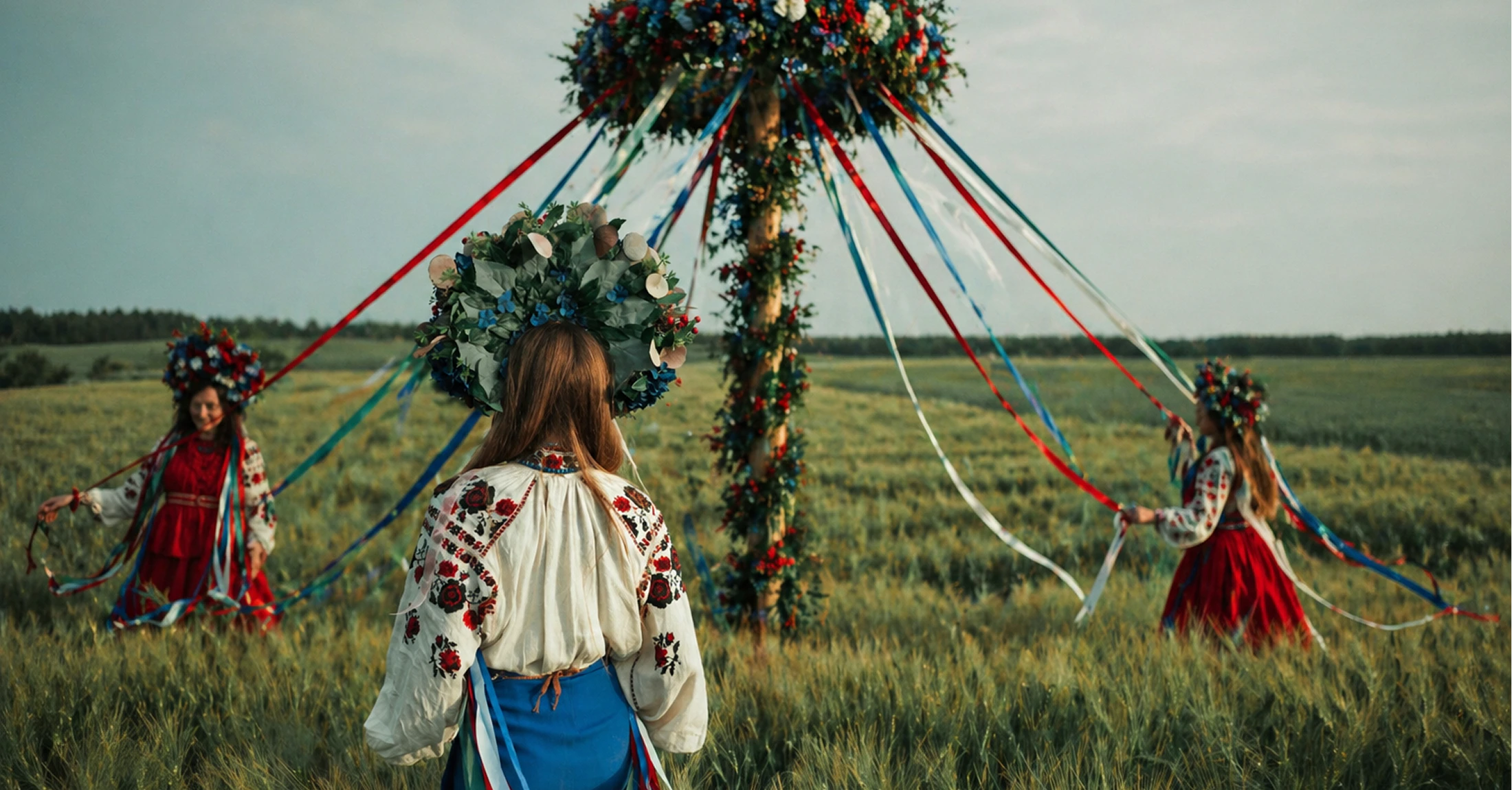
Puede que hayas visto brujas en tu FYP. Y cabañas, y mazos de tarot, y abuelas tejiendo a la luz de las velas, o personas encendiendo hogueras durante el solsticio, o un hombre con gorra plana persiguiendo una rueda de queso cuesta abajo en Gloucestershire.
El folclore vive un momento de auge. Pero ¿qué significa eso realmente? ¿Quién lo está impulsando? ¿Por qué el calendario pagano se ha convertido discretamente en el calendario de un internet más pequeño y acogedor? ¿Y por qué debería interesarte?
Un momento, ¿el folclore no ha existido siempre?
¡Sí! El folclore es el formato de contenido más antiguo que existe, pero lo que está ocurriendo ahora es diferente: no es la versión del folclore que probablemente esperarías.
Durante el último año (abril de 2025–abril de 2026), hice seguimiento de 911 mil menciones en inglés sobre folclore en TikTok, Instagram, Bluesky y Threads. Lo primero que observé al analizar los datos es que la nueva conversación en torno al folclore se organiza alrededor de la rueda pagana del año: los ocho antiguos sabbats que marcan los solsticios, los equinoccios y los días intermedios entre ambos.
Cada uno de esos sabbats aparece en nuestros datos como un pico medible de menciones. ¿Y el día del folclore más importante del año? No es Halloween.
Es Yule.
El ciclo anual genera picos de contenido
El 21 de diciembre de 2025 (solsticio de invierno), registramos casi 40 mil publicaciones con temática folclórica, el mayor volumen de cualquier día del año. Halloween/Samhain (31 de octubre) generó 19 mil. Beltane (1 de mayo) alcanzó 30 mil. Incluso el solsticio de verano, Imbolc, Ostara y Lammas aparecen con claridad. La rueda del año, llevada al entorno digital.
El folclore ya no aparece en el entorno digital como algo limitado a Halloween una vez al año. Es una conversación activa durante todo el año, con un calendario que la mayoría de los profesionales de marketing nunca ha tenido en cuenta.
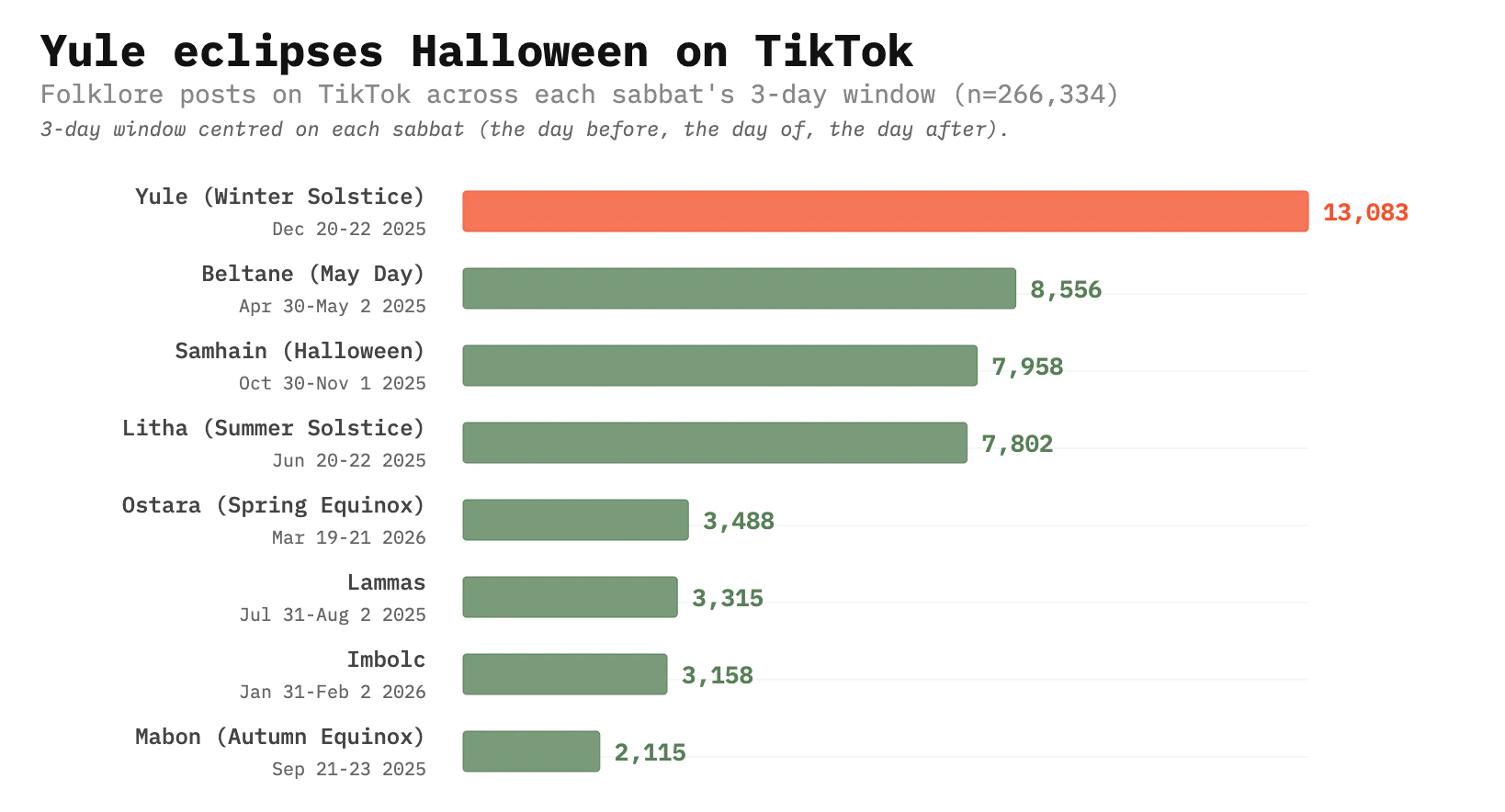
Publicaciones sobre folclore en TikTok durante el periodo de 3 días de cada sabbat. Fuente: Kim Townend.
Yule es el nuevo Halloween. Genera 1,6 veces más publicaciones que Halloween en TikTok. En el pico de un solo día (21 de diciembre vs. 31 de octubre), Yule obtuvo más del doble de visualizaciones y casi cuatro veces más engagement. El invierno pagano —fuegos, follaje perenne, luz de velas y rituales pausados— ha desplazado a la temporada secular del terror como el imaginario folclórico dominante.
El próximo festival del fuego Beltane también gana relevancia: ya es el segundo mayor momento folclórico del año en TikTok, por delante de Halloween.
La brujería y la magia son prácticas activas, no solo una estética. Casi el 15% de todas las menciones habla de brujería y, específicamente en TikTok, esa cifra sube al 19%. WitchTok ha superado su nicho de origen y hoy impulsa estéticas inspiradas en la brujería en belleza, bienestar y lifestyle.
El cottagecore está evolucionando: deja de ser una mera estética para convertirse en contenido basado en rituales. El análisis de imágenes muestra que las personas hacen labores de aguja, tejen, cocinan, leen y caminan por el bosque. Ya no es solo una estética. Es una práctica vivida.
Todo esto nos indica que el folclore no se está consumiendo como nostalgia. Se está viviendo como una identidad. El público no solo lee sobre el solsticio; va a Stonehenge para conmemorarlo. No solo compra una vela; lanza un hechizo en Imbolc.
TikTok es el epicentro del engagement en torno a Folklore
En comparación con el resto de canales sociales, TikTok muestra una sobreindexación en todos los temas folclóricos; es donde las personas descubren e interactúan con este tipo de contenido. Lo que vemos en TikTok es un conjunto de subcomunidades en torno al folclore, cada una con sus propios creadores, hashtags y códigos visuales:
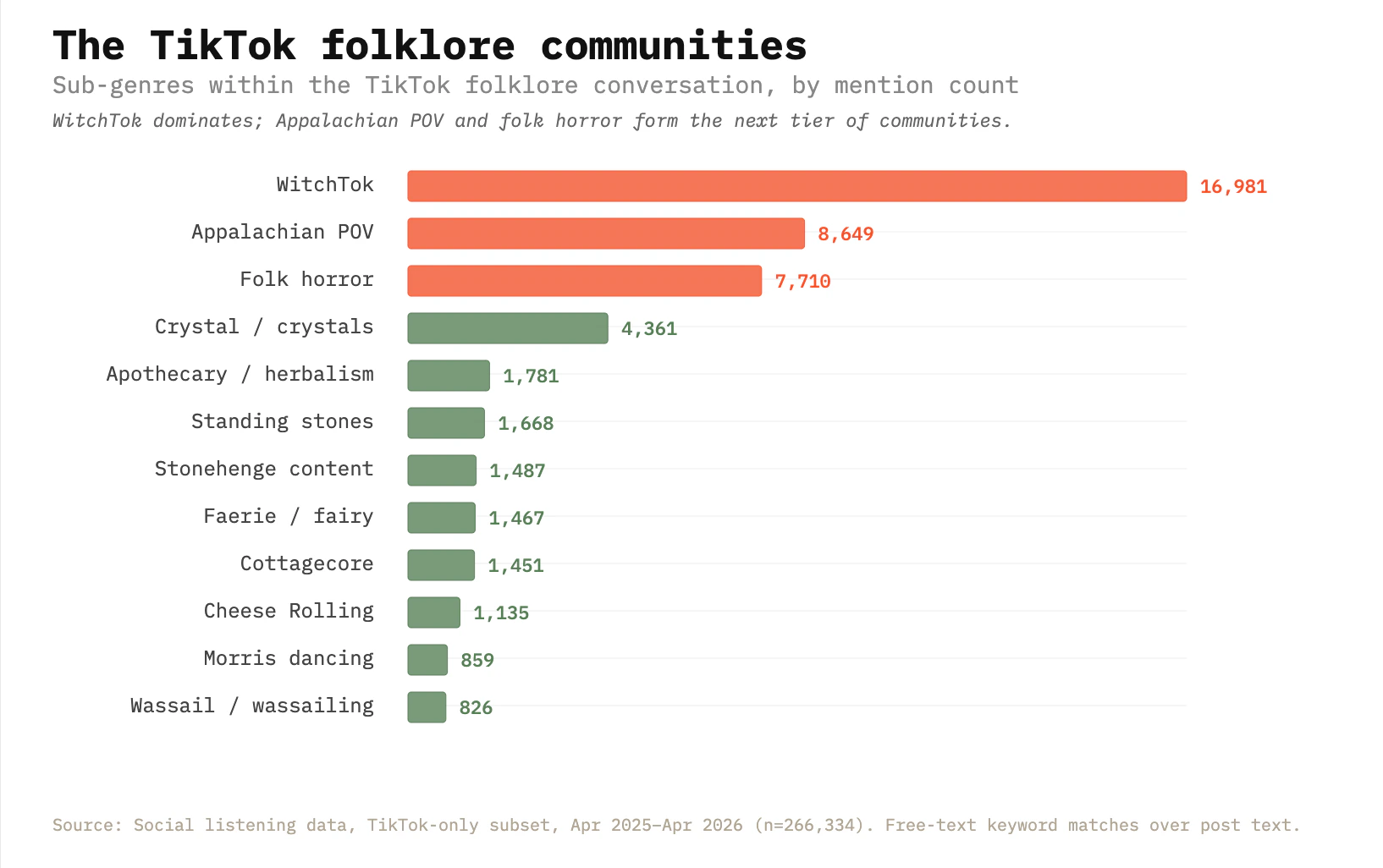
Comunidades de folclore en TikTok. Fuente: Kim Townend.
WitchTok es la mayor. La comunidad se sitúa hoy en la intersección entre belleza, bienestar, prácticas ocultistas y espiritualidad de la generación Z.
POV de los Apalaches es el éxito sorpresa del año. El terror folclórico regional estadounidense «POV: vives en los Apalaches, no mires por la ventana» está generando algunos de los mayores momentos virales de la plataforma.
El terror folclórico, tradicionalmente una temática claramente británica/europea, ahora cuenta con su propia comunidad joven y nativa de TikTok, donde la etiqueta #folkhorror suele aparecer junto a #urbanlegend, #ghoststories y #appalachia.
¿Y Beltane?
Quienes estén familiarizados con la rueda del año sabrán que Beltane se celebra el 1 de mayo. Beltane es un día de cuarto cruzado y, como descubrimos a partir de nuestra escucha social, el segundo evento del calendario más comentado en TikTok.
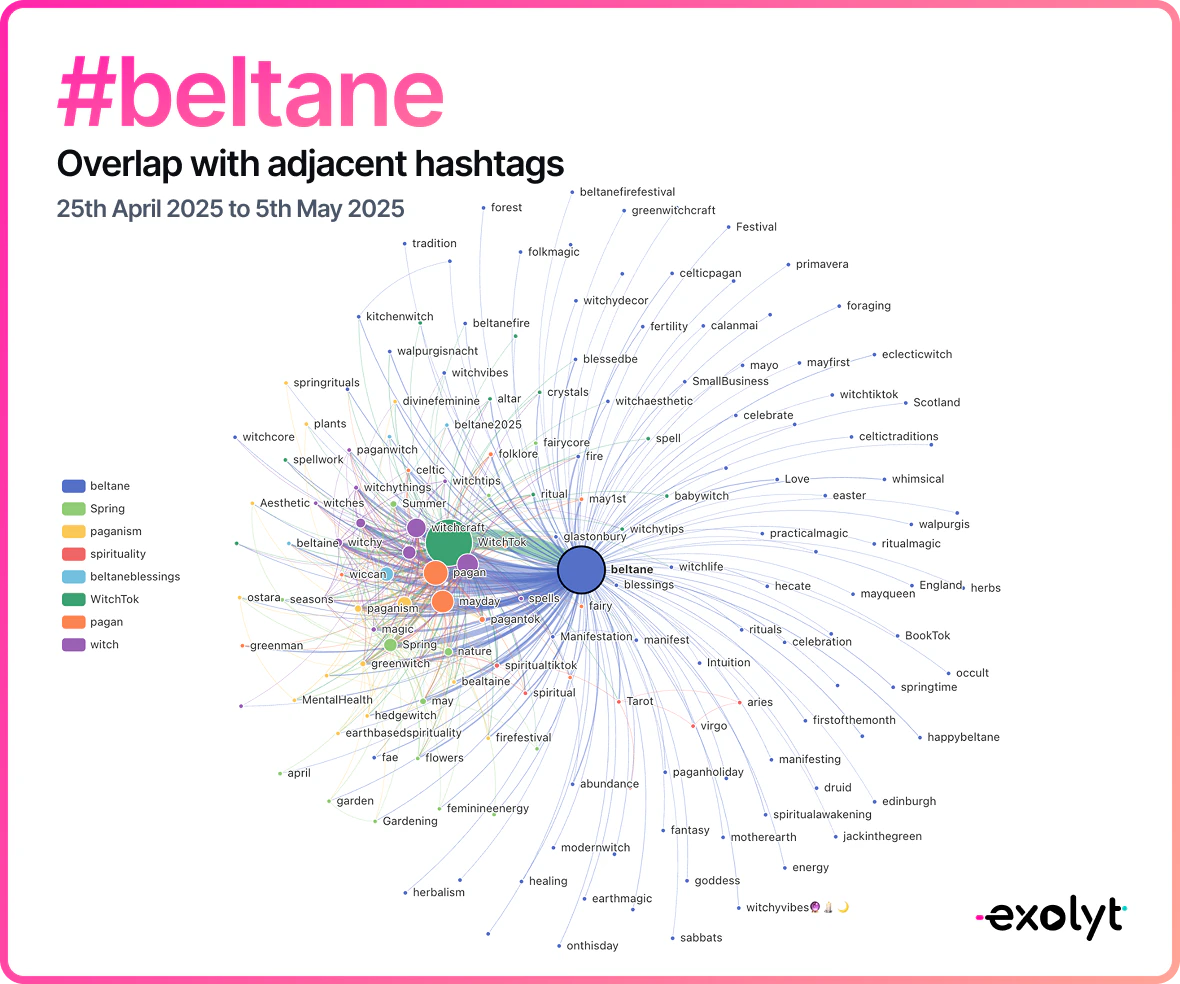
A continuación, se muestran los datos de solapamiento en TikTok en torno a Beltane 2025: entre el 25 de abril y el 5 de mayo del año pasado, #beltane generó 12,4 millones de visualizaciones.
Como se puede ver en el gráfico a continuación, el festival en sí es el epicentro de las distintas subcomunidades. Aparecen menciones a folklore, paganismo, tradición, brujería, tarot, manifestación y la germánica “Noche de Walpurgis” (noche de brujas), que se celebra dos días antes, todas junto a #beltane.
Entonces, ¿por qué está sucediendo esto?
Esta es la pregunta que más me interesa como estratega. La teoría ampliamente extendida de que el folklore está en auge porque la gente está desencantada con el capitalismo resultó ser solo parcialmente cierta. El lenguaje explícitamente anticapitalista o crítico de la cultura del hustle aparece en apenas un minúsculo 0,2 % de las publicaciones.
Lo que predomina, en cambio, es el reencantamiento: el 15% de las publicaciones sobre folclore en TikTok utilizan un lenguaje asociado con la magia, el significado, la intuición, la manifestación y la sincronicidad. El folclore aporta una capa de significado que ayuda a dar sentido a la vida moderna, no como una alternativa a ella.
Después aparece el sentido de pertenencia (7%, con menciones a comunidad, sororidad, aquelarre y aldeas), y nuestro tercer tema es la regulación del sistema nervioso (el 6% de todas las publicaciones menciona ansiedad, burnout y sanación).
También detectamos que el rechazo a la cultura del hustle sí está presente en los datos; simplemente se manifiesta en el lenguaje de TikTok con códigos espirituales:
“Para brujas con disfunción ejecutiva. O sea: ¡yo! El burnout NO es un fracaso moral. La quietud es sagrada en esta época del año. No le debes productividad a nadie para ser digna.”
En resumen: el folclore está ganando fuerza en TikTok porque ofrece reencantamiento, sentido de pertenencia y regulación emocional, y 2026 exigirá todo eso más que nunca.
¿Qué podría significar todo esto para las marcas?
El folclore cobra cada vez más relevancia y ofrece a las marcas con las audiencias adecuadas una vía para conectar con las personas durante todo el año.
En lugar de centrarse únicamente en el marketing típico de Halloween, las marcas pueden aprovechar los temas y relatos del folclore para conectar con una audiencia más amplia.
Este enfoque permite una interacción más significativa con los clientes, haciendo que sus experiencias resulten más cercanas y personales. Es una oportunidad para explorar algo distinto y crear contenido único durante todo el año.
Este es un artículo invitado elaborado por Kim Townend, estratega de redes sociales galardonada y consultora en escucha social con 20 años de experiencia especializada en redes sociales. Ha trabajado con marcas, medios audiovisuales y gobiernos de todo el mundo, y es experta en convertir datos en insights e insights en estrategia. Puedes encontrarla en su sitio web: https://kimtownend.com/ o en su página de LinkedIn: https://www.linkedin.com/in/kimtownend/